Examples are the fastest way to understand this term, because the definition is abstract and the examples are not. Each one below was documented publicly, and each one shows a slightly different failure.
1. Shrimp Jesus and the engagement-bait image
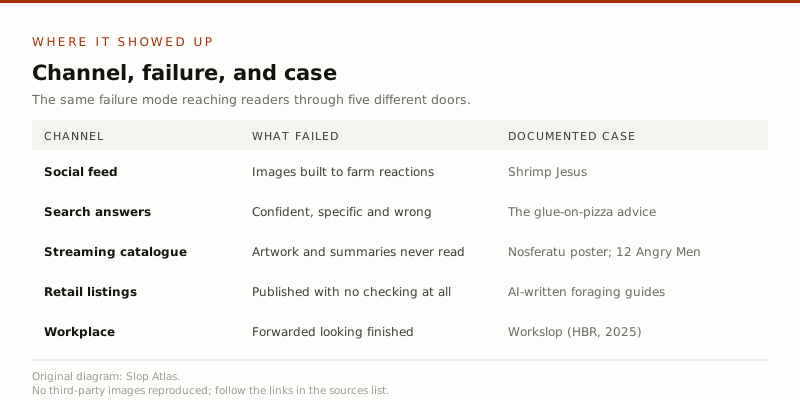
The image that introduced a lot of people to the word: a Jesus figure rendered in shrimp, photorealistic and completely impossible. It spread on Facebook alongside similar material, including animals playing instruments in human poses and children in surreal situations.
The point of these images is not to be believed. It is to stop a thumb. Absurdity travels, and where a platform pays for reach, absurdity pays. Why that incentive produces so much of it is a platform story rather than an aesthetic one.
2. Fabricated disaster photos
During the response to Hurricane Helene, synthetic images circulated as evidence, including one of a displaced child clutching a puppy that was used to argue that disaster relief had failed. The Conversation's overview of AI slop describes exactly this case: images that are not photographs of anything that happened, presented as photographs of something that did.
This is the example that moves slop from annoyance to harm. The image is not selling anything. It is being used to support a claim about the real world.
3. Search answers that invent facts
A now-notorious case: an AI summary advising people to add non-toxic glue to pizza sauce so the cheese would stick. The line has been quoted in academic writing on slop as an archetypal failure, because it is confident, specific, actionable and wrong.
The reason this example matters more than the memes is distribution. A generated image on a feed competes with other images. A generated answer at the top of a search result competes with the truth, and it wins by position.
4. Broken streaming catalogues
Streaming services have shipped AI-generated artwork and descriptions that nobody checked. Wikipedia's documentation of AI slop records several: a poster for the 1922 film Nosferatu depicting a character who does not resemble his appearance in the film; a thumbnail for 12 Angry Men showing nineteen men with smudged faces, none resembling the cast; a plot synopsis for Dog Day Afternoon that read, in part, that the writer did not have enough information to summarize further within the provided guidelines; and a recap of the first season of Fallout that placed a scene set in 2077 in the 1950s.
The last one is the useful example. It was removed after viewers noticed, which means it was live, in front of paying customers, with nobody reading it first.
5. Reference works with no author and no checking
AI-written books, study guides and cookbooks have been published to retail listings in large numbers. The pattern that makes these dangerous rather than merely bad is subject matter: foraging guides, medical explainers and exam preparation, where a confident error can hurt someone.
Wikipedia's article notes the flood of AI-generated books on Amazon as one of the early signals that drove the term into common use.
6. Synthetic influencers and fake people
Accounts have built large followings using generated people who do not exist, refining their content toward whichever audience converts best. Documented cases include a creator who built an AI persona aimed at a specific political audience after an earlier attempt failed to travel.
This is a different failure from a bad summary. It is slop used as infrastructure: the volume of synthetic material creates the following, and the following is the asset.
7. Advertising and brand material
Companies have shipped generated campaign imagery that audiences read as slop immediately. Documented examples include promotional graphics for a Glasgow event that showed fantastical visuals while the venue turned out to be a sparsely decorated warehouse, and a games publisher that posted posters for video games that did not exist.
When a brand does this, the cost is not the image. It is the signal that nobody senior read it.
8. Workslop, the office version
The least visible example and, for many readers, the most familiar. A study by Harvard Business Review with Stanford and BetterUp coined the term workslop for AI-generated content that looks good but lacks substance, and found it arriving in colleagues' inboxes with each incident costing hours to sort out.
Workslop is the clearest test of the definition, because there is no platform and no audience. One person generated something carelessly, and another person now has to work out whether any of it is real.
What the examples have in common
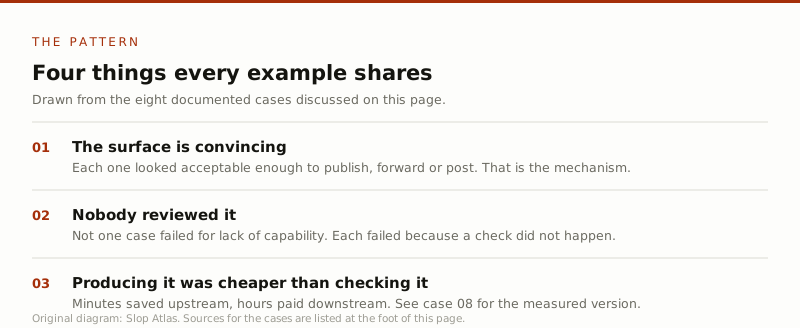
Four things recur:
- The surface is convincing. Every one of these looked acceptable enough to publish, forward or post. That is the whole mechanism.
- Nobody reviewed it. Not a single example here failed because the tool was incapable. Each one failed because a check that used to happen did not.
- Production was cheaper than checking. The economics sit at the center of the phenomenon. Someone saved minutes and pushed hours of work downstream.
- Something rewarded the volume. Reach, revenue, a deadline, a quota. Slop does not appear where there is nothing to gain.
Examples that look like slop but are not
It is worth naming the false positives, because over-applying the label ruins it.
- An AI-assisted article that a person edited, sourced and stands behind. Different category. The effort and the accountability are both present.
- Obvious satire. A joke that is meant to be recognized as synthetic has done its job when you recognize it.
- Amateur work with rough edges. A badly lit photo and a carelessly generated one are not the same thing, and treating every low-quality artifact as slop punishes people for lacking resources rather than for lacking care.
- A first draft. The failure is publishing it, not making it.
The test that separates the examples above from these is not how the content was made. It is whether anyone was accountable for it before it reached you.